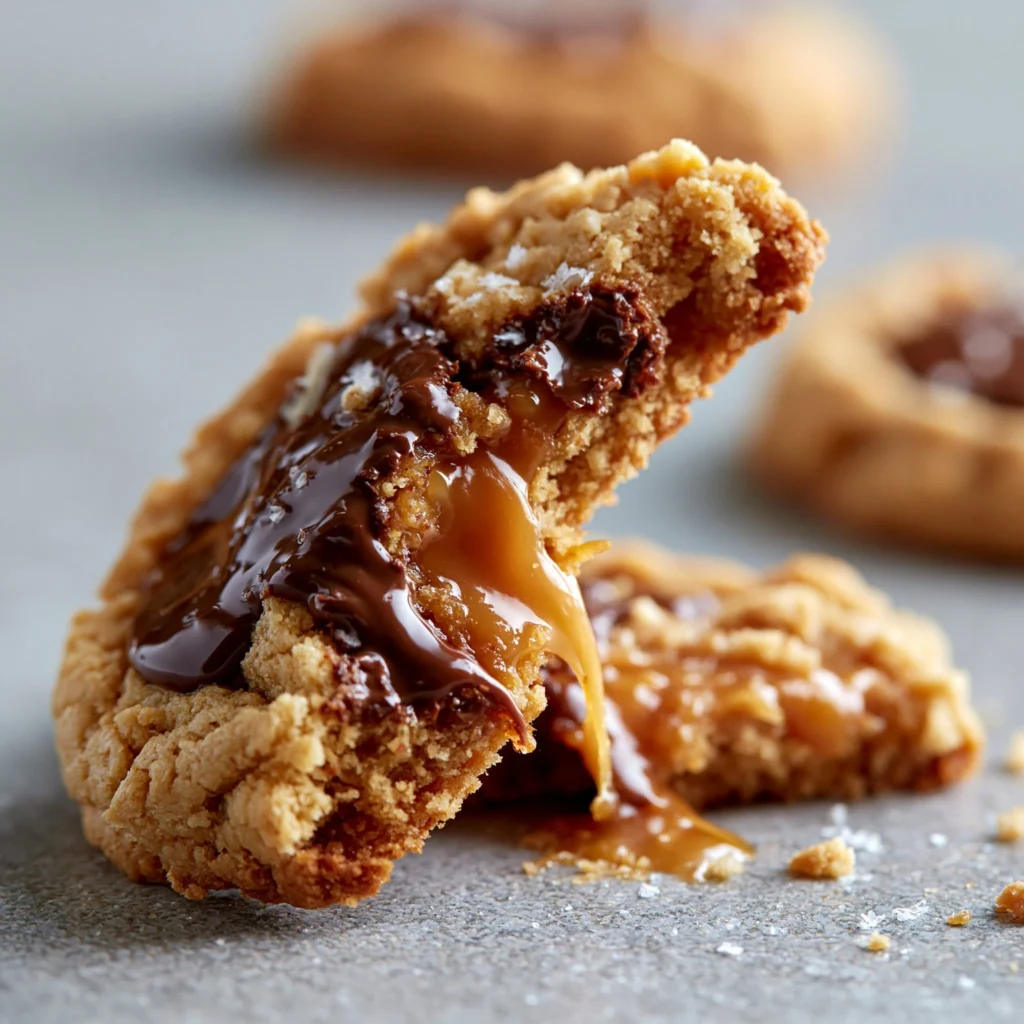
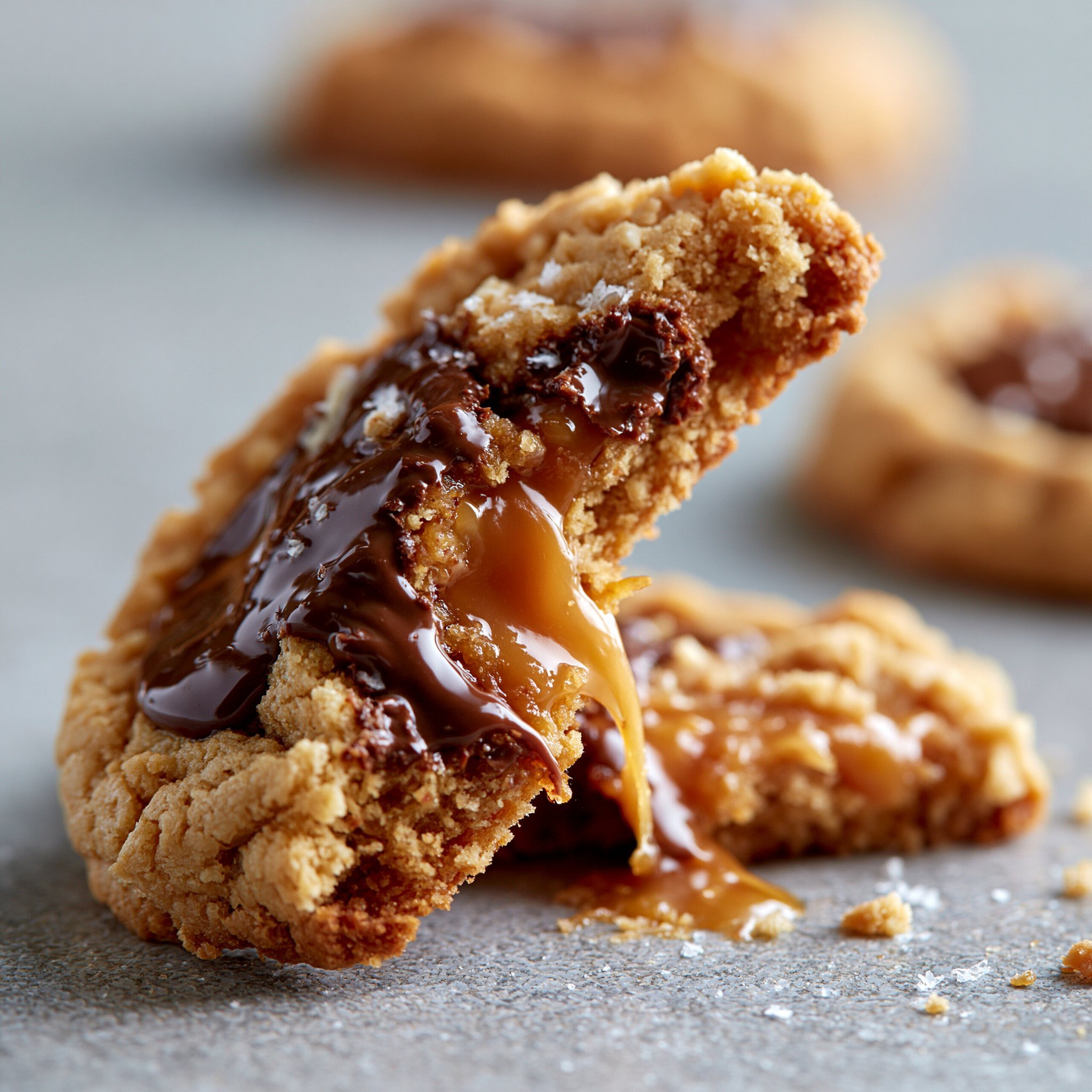
The best part of these cookies happens about two seconds after you take a bite: a soft, warm caramel center gives way under a thick peanut-buttery cookie, with little pockets of melted chocolate chips tucked all through. The edges set up just enough to hold everything together, but the middle stays tender—exactly what you want with a stuffed cookie.
They’re also refreshingly straightforward. It’s one bowl for the dough, a quick wrap-around-a-caramel moment, and then you bake just until the edges look done while the centers still look a touch underbaked. If you like the vibe of gooey, bakery-style cookies like chocolate brownie cookies, you’ll love what the caramel does here.
Why You’ll Love This Recipe
- That molten caramel center: stuffing each dough ball with a soft caramel makes every cookie feel like a surprise.
- Big peanut butter flavor: beating peanut butter with butter makes the dough taste rich and nutty without being dry.
- Two-sugar texture payoff: granulated sugar helps the edges set, while brown sugar keeps the centers soft and chewy.
- Chocolate in every bite: folding in chocolate chips means you get melty streaks and little chocolate hits throughout.
- Simple, familiar method: no special equipment—just a bowl, a mixer (or strong arm), and a baking sheet lined with parchment.
The Story Behind This Recipe
I wanted a peanut butter cookie that didn’t stop at “good”—I wanted a cookie with a moment in the middle. Stuffing soft caramels into the dough turned it into that: a familiar peanut-butter-and-chocolate cookie on the outside, with a buttery caramel core that stays gooey as long as you don’t overbake.
What It Tastes Like
These taste like a peanut butter cup took a detour through a caramel shop: toasted peanut butter aroma, vanilla warmth, and melted chocolate chips against a soft, buttery cookie crumb. The caramel center is sweet and silky, and it plays especially well with the slight saltiness in the dough—rich without tasting flat.
Ingredients You’ll Need
A few small details make a big difference here. Softened unsalted butter and creamy peanut butter beat into a smooth, fluffy base (this helps the cookies bake up tender, not dense). Brown sugar gives chew and a deeper, almost toffee-like note that echoes the caramel filling, while baking soda helps the cookies spread and set at the edges. For the center, use soft caramels or caramel bits—they’re what create that gooey core.
- Unsalted butter, softened
- Creamy peanut butter
- Granulated sugar
- Brown sugar
- Eggs
- Vanilla extract
- All-purpose flour
- Baking soda
- Salt
- Chocolate chips
- Soft caramels (or caramel bits), for stuffing
How to Make Peanut Butter Chocolate Caramel Cookies
- Heat the oven and prep your pans. Preheat the oven and line baking sheets with parchment paper. (Parchment helps the bottoms set without over-browning and makes the caramel-prone cookies easier to lift.)
- Cream the butter and peanut butter. In a large bowl, beat the softened butter and creamy peanut butter until completely smooth—no streaks. You’re looking for a unified, creamy mixture that clings to the beaters.
- Add both sugars and beat until creamy. Add granulated sugar and brown sugar, then mix until the dough base looks lighter and a bit fluffy. Scrape the bowl if you need to—those pockets of sugar love to hide on the bottom.
- Beat in eggs and vanilla. Add the eggs and vanilla extract and beat until the mixture looks glossy and well combined. If it looks a little loose at first, keep going; it comes together quickly.
- Mix in the dry ingredients—don’t overdo it. Add the flour, baking soda, and salt. Mix just until you don’t see dry flour. The dough should be soft and scoopable, not powdery.
- Fold in the chocolate chips. Stir until the chips are evenly distributed, so every cookie gets plenty of chocolate.
- Stuff with caramel. Scoop a portion of dough and flatten it in your palm. Place a caramel piece in the center, then wrap the dough around it and roll into a sealed ball. (Take a second to pinch the seams—any gaps can let caramel leak.)
- Bake until the edges are set. Arrange dough balls on the parchment-lined sheets with space between them. Bake until the edges look set and slightly deeper in color, but the centers still look a bit underdone and puffy. That “not quite done” center is what keeps the cookies soft once they cool.
- Cool in stages. Let the cookies cool briefly on the tray so they can firm up enough to move, then transfer to a rack to finish cooling. The caramel center will be very hot right out of the oven—give it a minute before biting.
Tips for Best Results
- Use truly softened butter. If the butter is still cool and firm, it won’t blend smoothly with the peanut butter, and your dough can end up a bit uneven.
- Seal the caramel completely. Even a tiny opening can turn into a caramel “lava leak” on the pan. Pinch and roll until the ball feels smooth all the way around.
- Pull them when the centers look slightly underdone. The edges should look set, but the middle should still look soft—carryover heat finishes the bake while keeping that tender chew.
- Let them sit on the pan briefly. Right after baking, the cookies are delicate and the caramel is loose; a short rest helps them hold their shape when you move them.
- Expect the caramel to be hot. The center stays molten longer than you think—especially if you eat them warm.
Variations and Substitutions
- Caramel bits vs. soft caramels: Both work. Caramel bits are faster to portion; soft caramels give a more dramatic gooey center.
- More or less chocolate: You can slightly adjust the amount of chocolate chips to your taste—just keep enough in the dough so each bite still gets chocolate.
- If you’re into playful, stuffed-cookie energy, you might also like cotton candy cookies for a totally different (but equally fun) vibe.
How to Serve It
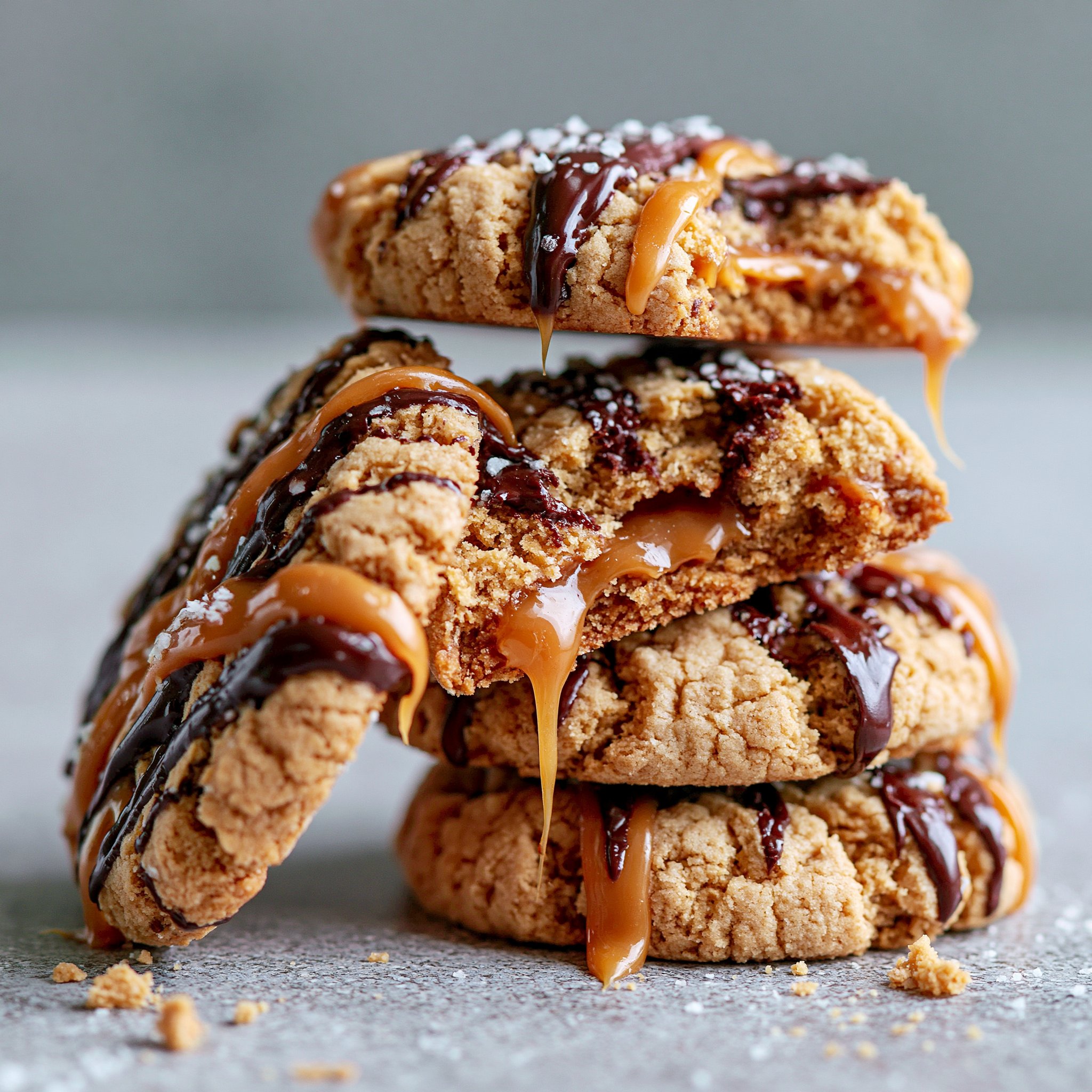
Serve these slightly warm if you can—the caramel center is at its gooey best. I love them with a cold glass of milk or alongside a simple scoop-and-snack dessert board with extra chocolate chips scattered around for visual cueing. If you’re building a small treat plate, add something bite-sized like healthy chocolate coconut bites to balance the richness.
How to Store It
Store the cookies at room temperature in an airtight container so the centers stay soft and the caramel doesn’t turn hard. If you’re stacking them, place parchment between layers to prevent sticking (caramel can be clingy). For a just-baked feel, let a cookie sit out for a few minutes if it was tightly sealed in the container—the caramel softens as it comes back to room temp.
Final Thoughts
If you love the peanut butter + chocolate combo but want a cookie that feels a little extra without extra fuss, this caramel-stuffed version delivers. Bake them until the edges look set and the centers still look soft, and you’ll get that chewy, gooey middle that makes people reach for a second.
Conclusion
If you want to see how other bakers play with this same irresistible flavor trio, take a look at Bakerita’s caramel-filled peanut butter chocolate chip cookies, compare the approach in Courtney’s caramel peanut butter chocolate chip cookies, or explore a different caramel-peanut-butter cookie style with Hungry Enough To Eat Six’s peanut butter caramel cookies.
Peanut Butter Chocolate Caramel Cookies
Ingredients
Method
- Preheat the oven to 350°F (175°C) and line baking sheets with parchment paper.
- In a large bowl, beat the softened butter and creamy peanut butter until completely smooth.
- Add granulated sugar and brown sugar and mix until the dough looks fluffy.
- Beat in the eggs and vanilla extract until glossy and well combined.
- Mix in flour, baking soda, and salt until just combined.
- Fold in the chocolate chips until evenly distributed.
- Scoop a portion of dough, flatten it in your palm, place a caramel piece in the center, then wrap the dough around it and roll into a sealed ball.
- Arrange dough balls on the prepared sheets with space between them.
- Bake until the edges are set and the centers look slightly underdone, about 10-12 minutes.
- Cool the cookies briefly on the tray, then transfer to a wire rack to finish cooling.